Outreach workers carry a responsibility that stays with them long after a shift ends. They know where people sleep, what puts them at risk, and how fragile trust can be. Many hesitate to collect personal or location details because they worry the information could be misused or misunderstood. That hesitation comes from care.
From Counts to Coordinates explored how to honor that instinct and still gather the information needed to act. When data serves a clear purpose and lives inside systems built to protect it, privacy strengthens fieldwork rather than limiting it.
Privacy as a Foundation for Trust
Everyone in this space acts as a steward of someone else’s information. That role carries weight. People share details because they hope it leads to safety, not because they want another record in another system. That makes purpose essential.
Data collection works best when it begins with a clear reason. Teams gather only what supports safety, connection, or continuity of care. Narrowing the scope respects personal boundaries and shows clients that their information will not be collected out of habit.
Clients notice when they are asked the same questions repeatedly. It signals that their information moves without intention. Purpose-driven collection reduces that repetition and shows that the details people offer are handled with care.
Field teams often hold back on certain questions because they want to protect the people they serve. Ethical collection practices give that instinct structure. Privacy-first approaches do not ask workers to care less. They reinforce the care already guiding their decisions.
Trust grows when information is gathered thoughtfully and guarded well.
Why Secure Systems Strengthen Privacy in the Field
Paper forms, email threads, and spreadsheets feel familiar, but they introduce risk that does not match the sensitivity of the work. Pages can disappear. Files can get forwarded. Spreadsheets can get copied into places no one intended.
Modern tools give outreach teams basic protections that meet the reality of field outreach.
Encryption as a safeguard
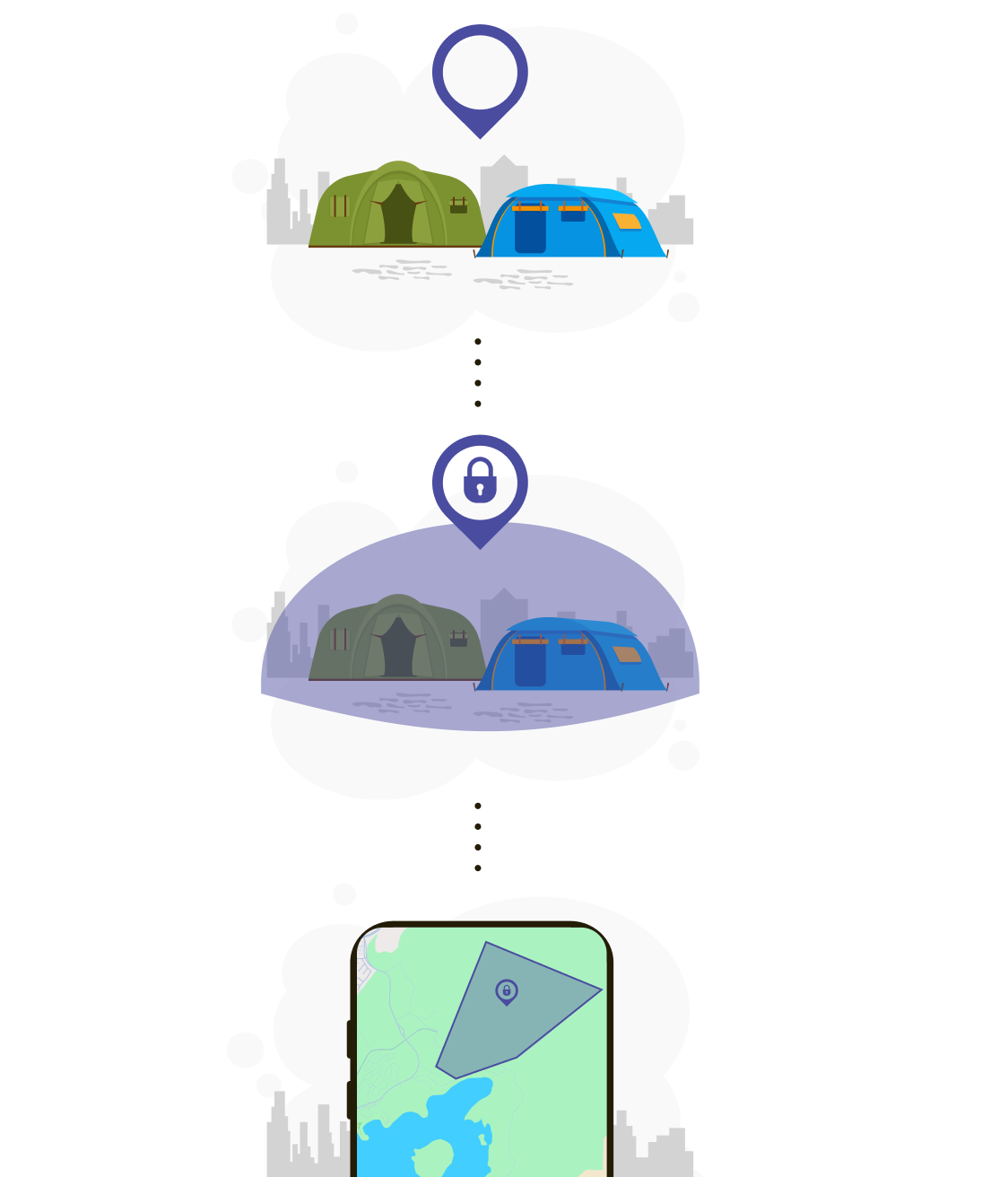
Encrypted systems protect information during collection, during transit, and in storage. If someone intercepts a file or takes a device, the information they see remains unreadable. Tools such as ArcGIS Survey123 and Clarity Human Services treat sensitive details as something that require protection at every step.Permissions as a control
Role-based access limits visibility so people see only the information tied to their responsibilities. Outreach workers, supervisors, HMIS staff, and volunteers each view what they need. Communities decide where those lines fall. That clarity lets workers assure clients that their information remains within the team.Governance and training in practice
Policies outline what to collect, how long to keep it, who may view it, and when sharing is appropriate. Training brings those decisions into practice and helps staff explain protections in familiar language. When technology, policy, and daily practice work together, privacy becomes something staff and clients can rely on.
These safeguards protect more than data. They protect the relationships at the center of outreach.
How Location Data Supports Safer, Smarter Outreach
You cannot manage what you cannot measure, and that includes where people sleep or seek safety. When privacy sits at the core of your approach, collecting precise locations becomes a way to protect people rather than expose them.
Two examples from the ClarityCast show how secure data transforms outcomes.
Evacuating ahead of a flood in San Bernardino County
The county captured accurate coordinates during the PIT count and used that information to map where people were living outdoors. After a severe storm, officials announced an emergency dam release with only a few hours of warning. Instead of guessing, responders moved directly to known sites and helped people leave the floodplain in time. Secure, purpose-driven location data guided every step.Reducing duplication in Abbotsford, British Columbia
In Abbotsford, several outreach groups served encampments hidden in wooded areas. Teams carried heavy supplies up long trails only to learn that another group had visited minutes earlier. Meanwhile, other encampments received nothing. Once organizations began sharing privacy-protected location data and coordinating through real-time mapping, duplication dropped and overlooked sites were finally reached. Scarce resources were used more effectively because everyone could see the same information.
In both communities, secure location data supported faster action and safer outcomes. Privacy did not stand in the way. It made the work possible.
Building a Safer, Smarter Future for Field Data
PIT counts deliver a clear snapshot, yet unsheltered homelessness shifts constantly. Treating PIT as a starting point, not an endpoint, gives communities a stronger foundation for the rest of the year.
When teams collect location information responsibly throughout the year, they gain real visibility into shifting conditions. They see where encampments move, where hotspots emerge, and where outreach rarely connects. That perspective guides staffing, resource allocation, and earlier intervention.
How Clarity Supports a Privacy-First Approach
Clarity allows teams to gather location information without relying on paper, email, or unsecured documents. Geolocation toggles at specific touchpoints keep collection intentional. Encounters, services, and observations live inside secure, role-based workflows designed to protect clients and support consistent outreach.
Maps and dashboards then give teams a shared view of unsheltered activity without exposing unnecessary detail. Outreach workers, managers, and HMIS staff each see what they need to act.
ArcGIS Survey123 + Clarity
The new ArcGIS Survey123 integration now lets communities import unsheltered PIT surveys directly into Clarity. The connection supports secure mobile collection, in-system mapping and review, and single-step PIT reporting. Staff spend less time transferring data and more time acting on it. Privacy stays intact from the moment a volunteer submits a survey through the final report.Responsible Data Protects People and Strengthens Outreach
Outreach workers want to help without creating new risks. Privacy-centered practices honor that commitment. Encryption, permissions, governance, and data minimization give communities a framework for collecting what matters while protecting the people behind the data.
This approach helps teams move from hesitation to confidence and turns information into something that improves safety and care. It strengthens outreach, supports better coordination, and deepens trust.
For more insight, revisit the latest Clarity Cast and explore the details behind our latest release.